Songs Made to Last: Redeye on Friendship, Storytelling, and Finding Their Sound
Story, photographs, and interview by Zuleyka Vargas.
Brooklyn-based indie duo Redeye turns everyday moments, longtime friendship, and honest storytelling into infectious indie rock made to be played loud. Owen Reid and Ted Hartel open up about their journey from San Francisco to Brooklyn, the evolution of their sound, and the stories behind the music that continues to shape who Redeye is becoming.
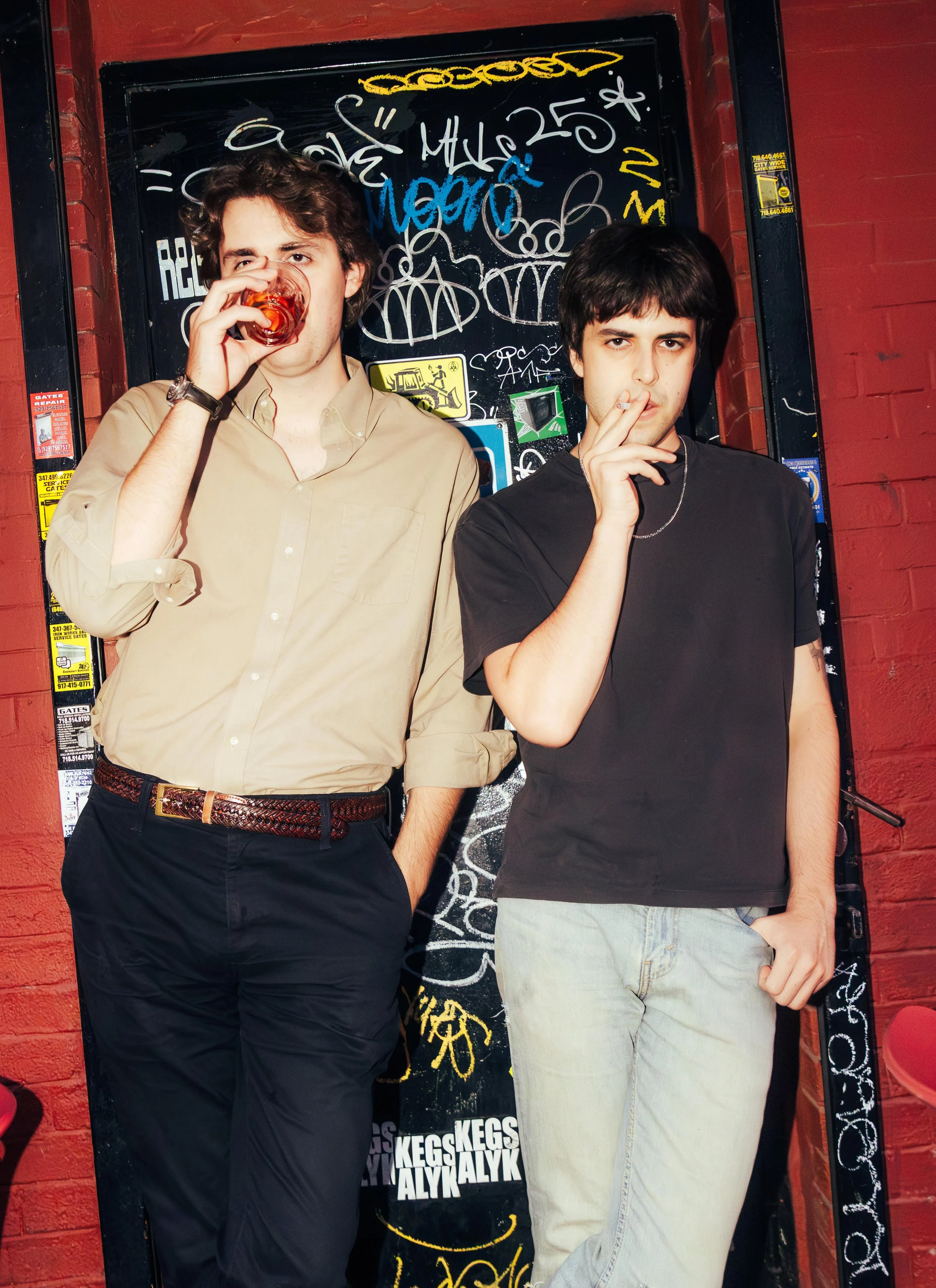
Some bands write songs, and others capture moments in time. Redeye falls somewhere in between. Their songs capture the feeling of unforgettable nights, conversations that last until sunrise, and the bittersweet realization that growing up doesn't always come with its answers. Mixing infectious melodies with an undeniable sense of nostalgia, the band has carved out a sound that feels both familiar and entirely their own. Behind their music, however, is a duo driven by their honesty, curiosity, and genuine love for creating together. Sitting down with Redeye, one thing became immediately clear: their chemistry isn’t manufactured. Conversations naturally bounced between each other and every answer reflected a band built as much on friendship as it is on music. Whether they're reflecting on moments that have shaped their journey or looking toward what's next, Redeye approaches music with the same mindset: something genuine. We spoke with the band about their journey, the stories behind their music, the creative process that fuels their songwriting, and what they hope listeners take away long after the final riff fades or the lights come up at the end of one of their shows.
Formed in 2023, Brooklyn-based indie duo Redeye comprises Owen Reid (songwriter, vocalist) and Ted Hartel (songwriter, guitarist), whose friendship dates back to their high school years in San Francisco. Although the band now calls Brooklyn home, the foundation of Redeye was established long before its formation, rooted in years of friendship, trust, and a shared passion for storytelling. That lifelong connection continues to shape the way they create together, extending far beyond the studio and stage into a creative partnership that defines both their music and identity as a band. For Redeye, songwriting is more than putting words to a melody. Deeply inspired by the honesty and self-expression of the singer-songwriter tradition, the duo draws inspiration from artists ranging from Led Zeppelin to Elliott Smith, blending the energy of rock with a more intimate approach to storytelling. These influences shape how Redeye transforms memories, emotions, and everyday moments into songs that feel personal while still inviting listeners to make them their own. Rather than simply telling stories, Redeye creates a space for listeners to find pieces of their own experiences within them.
At the heart of Red Eye's music is a desire to create something that lasts. Since the release of their debut singles, "How It Ends" and "Wait" the duo has continued to shape a sound that feels unmistakably their own. Blending infectious indie rock melodies with bright instrumentation and a nostalgic spirit, their music is made to be played loud, sung along to, and danced to. Every release carries an infectious energy while staying true to Redeye’s commitment to genuine storytelling, proving that music can be both exciting and meaningful at the same time.
One of Redeye's earliest releases, "How It Ends" offers an introduction not only to the band's sound, but also to their approach to songwriting. While the song became one of the duo's first singles, its origins stretch back years before Redeye was officially formed. Guitarist Ted Hartel first wrote the now recognizable chorus riff when he was just about 12-13 years old while experimenting on an acoustic guitar. At the time, it carried a much softer, moodier sound and remained nothing more than an unfinished idea. Years later, Owen Reid revisited the riff, looping and experimenting with where it could go before sharing it with Ted again. Both immediately recognized that there was something special about it, and the idea steadily evolved into the version listeners know today. The Story behind "How It Ends” reflects Redeye's creative philosophy, proving that sometimes the strongest songs aren't written overnight, but grow alongside the people creating them.
As Red Eye continues to grow, one thing remains constant: their commitment to creating music that feels honest. Whether it's a melody written years ago or a story inspired by everyday life, the duo approaches every song with the same intent: to create something people can genuinely bond with. Rooted in friendship, curiosity, and a shared passion for storytelling, Red Eye has built more than just a collection of songs. They've created a space where listeners can relive memories, embrace the present, and find comfort in knowing they're not alone in what they feel. As their journey continues, one thing is certain. Red Eye is only getting started.
We had the opportunity to sit down with Redeye for an exclusive interview with With The Band Magazine. A huge thank you to Owen and Ted for taking the time to share their story, creative process, and the journey behind the music. Read our full exclusive interview below.
WTBM: My favorite song is "How It Ends" with "Wait!" being a close second. Since it's one of my favorites, I wanted to ask: how did the idea for "How It Ends" first come about?
Owen: “Yeah, there’s a real story there.”
Ted: “I was 12, maybe 13 and I’d been playing a lot of rock bands and had just picked up the guitar a year prior. I started fiddling with little riffs and the riffs in the chorus of how it ends was originally something that I had written when I was 13 on the guitar. It was very different on the guitar, it was acoustic. It was soft and moody and kinda minor and I had thought it was good and tried to turn it into a song at some point. Owen and I were trying to think of what to write for our next song and I actually don’t actually remember if the verse or the chorus came first.”
Owen: “Yeah, I remember I was in the subway and Ted had sent me the audio recording of his guitar and I remember listening to it. It was sort of different from how we have it now. Like instead of being repeated, it sort of ascended over time and kind of had it’s movement to it, which was nice. But, I wasn’t exactly sure how we would translate that into what we were doing. I think I got home and I tried just looping it as if it could be a repeated riff over some changing chords. And then I think I showed Ted that and he was like “Oh this is a really cool way to use this”. And I think that chorus then did come first. And then we tried a bunch of verses that would fit with it and eventually we ended up with what we have now.”
WTBM: So, the original version is nothing like the one you have now?
Owen: “No, we’re actually still searching for Ted’s original audio recording. I’m sure it’s buried somewhere on something.”
Ted: “Yeah, I think it’s probably on a 2012 iPod touch, which means it’ll be hard to find the original original one. The thing I sent Owen was like a recollection because I’ve jammed on that thing for enough years that I can’t count them, like 15 of them. And the soft version of the riff still is very much in my head. It was definitely one of those things where, when we found the chorus, we were immediately like, oh yeah, this is definitely good. Which is why writing a verse is so difficult. In general, whenever we write a song, the best part of the song becomes the bar for the rest of it. And so, if we have a verse we’re not that excited about, and then we write a really good chorus, we are now bound as the chorus.”
Owen: “And usually take away the old verse. Like, if we have a verse that we like, and then it leads naturally into the chorus that we like even more, then suddenly our loyalty is with that chorus, and then we’ll throw away the old chorus and find something that lives up to the best part of the song, you know?”
Ted: “Because we like the chorus to how it ends so much.”
Owen: “So, we had to get rid of a verse. We might even say that we never figured it out. But that's okay. Some questions are okay being left unanswered. And maybe someday we’ll try, but right now we’re working on new music that we’re also very excited about.”
WBTM: It’s funny because I remember listening to the demo version of how it ends when I first found out about you guys and then when you guys had your re-release show on baby’s all right, I actually didn’t know it was a re-release show so I remember listening to it again after that and realizing that it was a little different from the one before, but I had still liked it either way.
Owen: “Yeah, totally. That speaks to a whole thing that happened where neither one of us has a ton of experience writing or releasing music. Both of us have been life long music lovers and both of us had bands when we were younger, But in a lot of ways we had not started doing this seriously until 2023, which it’s been a couple years now, but a lot of that time I think has been spent running up against these hurdles and trying to figure out how to push past them so that our band can keep going forward. So, one of those was how do you write a good song? That took us a while. We did it for a while. And then it was, okay, we have a good song, how do we record it? That took us another year to figure out. So, we finally wrote those two songs, released them. We were never super happy with how they sounded, so we then spent some time trying to figure out, okay, what does the process look like? We sort of figured it out with a guy that we’ve been continuing to work with. We started fighting out with a guy that we’ve been continuing to value. His name is Matt Shane. He’s really great, I think those first two songs were a huge learning experience. They are very much closer to our intentions for them, if not maybe entirely there. I will say, though, on Burned, which is the song that’s coming out in about a week, right? I think maybe I’m going to eat my words and be telling the same story in three months. Certainly weirder things could happen, but I would say we finally figured out what we want to do in the studio, and my god, I mean that song. I don’t know if that song could exist more honestly to it’s intentions and that's really exciting.”
Ted: “And on the record we nailed it. I think if someone doesn’t like the song, it’s because they don’t like the song. It’s not because we didn’t do a good job, it’s because they don’t like it for what it is.”
WTBM: How would you guys say your songwriting process is? Is it usually one person reading the ideas or is it both of you guys coming together for an idea?
Owen: “Yeah, it’s extremely collaborative. I don’t think we have a song that could exist without the other person having been part of it. I think that often it'll start with an idea, and I think those ideas come from either of us, and we have a lot of ideas. Ted will send me little noodles on the guitar, and I'll put together an Ableton session. It'll be "What do you think of these chords?" or "What do you think of the melody over it?" And most of the time, the other person is like, yeah, yeah, that's cool, but I don't know if I'm super excited about it, and that's just the nature of the game. But maybe one in five or six times we bring an idea to the other person, and the other person is like, oh, dude, you are onto something here, this is really cool, and in those situations, that is when we put our nose to the grindstone. You know, I have a studio in my apartment in Bushwick, with a bunch of guitars, an interface, a couple of amps, and, you know, an Ableton session. And I’ve been working on music full-time, and Ted still works a 9-5. Once we’ve figured out an idea we like, I will just fuck around with it for a couple of days, and then Ted will come by the apartment, and we’ll work on it together. It's a lot of sitting down together and working things out until we have a song that, ideally, is full of parts both of us are stoked about the entire way Through.”
Ted: “We both interact with music differently. Owen is very detail-oriented and iterative, and I’m jammy. It'll be common for us to loop, and I’ll bang out 15 guitar parts in 5 minutes. After we come up with all these ideas, we'll decide which ones we like best, and then Owen might splice things together or modify them to make it gel better with the rest of the song. Other times, it's that you come up with a thing, something that's come in immediately or has been there for a while. The whole thing is a game of ping pong for sure. It’s definitely one of us will go; let me get the ideas. Now I’m ready to present to you, and then the other will say, yes, but or no.”
Owen:“I am really grateful to have someone I can work with who is not always on the same page but generally wants the same things I do. And I think that one of the things that I'm most proud of that we've been able to do is truly create an environment for the two of us where it is okay to say I don't like that or it's okay to say I feel really strongly about this. We will try anything that either of us is excited about, but we will also respect when neither of us is excited about the same thing and work to find something that works better for the two of us.”
WTBM: As a photographer, I overthink, as anyone does in any field. For me it’s if my pictures aren’t reaching the people that I want to reach, such as bands or people like you and everyone else. We do experience these feelings, but eventually do push through. So, I wanted to ask: have there been any moments when you guys didn’t wanna keep playing or got cold feet, and how did you push through?
Ted: “That's a great question. I think instantaneously, totally. For instance, before the first Bowery Electric show, right? I mean, Owen can speak on the nerves of this.”
Owen: “Yeah, it was our first time playing a real show. We had invited every single person we knew in New York City and could only imagine there would be strangers, too, which there always are. I remember sitting on my couch, like a night or two before the show, just being like, oh shit, what have I gotten myself into? Like, there is this night approaching now, and all these people are paying. They paid money to see us, and I’m like, dude, have I made the biggest mistake of my life? Am I about to embarrass myself in public more than ever before? And I get those feelings all the time. I would say, have I ever been so nervous for a show? No. There is a real element of doing it and realizing it is not as scary as you think, but yeah, it’s hard doing this. It’s hard to pursue something with everything you have in a dynamic where success, more or less, comes down to whether people decide you're compelling or interesting enough to follow. And sometimes you can be really blown away by people’s excitement and support, like it feels good to hear that you’re excited. That means something to us, and it means something to anybody excited about our music, but oh my god, yeah, it's fucking hard. You go back to the real reasons you're doing it in those moments, which is cliche and hippie dippy, but it is about art. It’s about being in a world that's so fucked up and not going in a good direction, and deciding that we're going to do something that feels good. And that is the source that I tried to go back to when I have those moments of feeling just really discouraged, which totally happens.”
Ted: “For me, it was when we were trying to figure out "how it ends" and "wait", right? The second time, in particular, like at the beginning of this year, we have been through several different studios, producers, and recording engineers, and we were not getting what we wanted. There was a period where I was like, fuck am I just not that good at this? Am I a bad guitarist, and can't I bring this thing I want to bring to life to life? And that doubt stems from when I was younger. It was unpleasant then, and it was even more unpleasant this year. The way we pushed through it felt like we heard something good in these songs. There is a core that is worth pursuing.”
Owen: “You get so much of your identity and self-esteem wrapped up in what you’re doing. The only comfort I get is knowing that many artists struggle with that feeling, even those who are established and highly revered by their peers, and that self-doubt is normal. I think I do feel a sense of solidarity with anyone who is doing creative work, trying to break out of whatever path is established. Like no, I have something to say. I don't care if it's music, photography, or art. It’s hard to erase or try to drain out the feelings of doubt, but I have a lot of empathy for you and everyone else.”
WTBM: You guys have mentioned your new single, “Burned,” coming out on the 14th. Without giving too much away, what can listeners expect from the new track?
Ted: “They can expect it to be harder than how it ends and wait. It is really high-energy, and if someone has been to a live show, they will be well primed for what the song is like. We did a good job of capturing the intensity we bring to live shows.”
Owen: “I should interject. We weren't initially intending on releasing this one next, but the producer, the audio engineer guy that we talked about, came to our show at Baby's All Right. He was like, "Listen, guys, I know you have that other song lined up for our next project, but there was one song that made the crowd really lose their shit." What song was that? And we were like, oh, that's burned. And that was what made us decide to prioritize it. We wanted something we know gets people authentically excited in the room.”
Ted: “This song, out of all of them, makes me want to move the most and break stuff. We aren't smashing anything in the music video. We did think about it, but it's something that's been done enough in rock music, so we figured, let's skip that trope. But if you do have a thing that you want to smash, then this is the perfect song for it.”
WBTM: To close off, if someone has never heard of Redeye before, what’s one thing you’d want them to know before they press play.
Owen: “That’s a really good question; you really did your homework. What I would want people to know is that we are artists who are not using music as a means to become famous or influencers. It is the music that comes first, and the other stuff around it is just background. Like, yes, we are posting or running social media accounts, but we are doing this in support of the art. I would hope that would be obvious, and if it's not, I want someone to know.”
Ted:“I want someone to know we had fun making the songs and hope they did too. Our music is fun; we don’t write stuff that's extremely melodramatic or sad, or extremely cheesy or happy. There's a time and place for that kind of music. We’re writing songs that you have fun memories of.”